Speaking at the CryptoCompare London conference Tuesday, Boerse Stuttgart’s chief digital officer, Dr. Ulli Spankowski, admitted he had been «surprised» by the positive effect 5AMLD had on attracting traditional financial institutions into cryptocurrencies.
The fifth anti-money laundering directive (AMLD5) has unexpectedly increased institutional interest in cryptocurrencies, according to an executive at the crypto trading subsidiary of Boerse Stuttgart.
«I actually didn’t think anything would happen because banks and other financial institutions could already do crypto custody and could do crypto trading,» Spankowski said. But since the law came into force earlier this year, «we now see a lot of interest from the traditional players as well.»
AMLD5 requires crypto companies based in EU member states to register with local regulators, introduce know-your-customer and hold information on clients’ source of funds.
Some regional crypto players announced plans to leave the EU’s jurisdiction soon after the directive came into effect back in January. Options exchange Deribit moved from the Netherlands to Panama, complaining AMLD5 placed «too-high barriers» for the majority of its clients. A week later, non-custodial exchange KyberSwap announced it was moving from Malta to the British Virgin Islands.
Boerse Stuttgart had listed a handful of crypto financial products on its main trading platform, but only fully entered the cryptocurrency space in September when its subsidiary, Boerse Stuttgart Digital Exchange (BSDEX), launched a bitcoin-euro spot trading pair.
«Apparently crypto is now not bad and illegal and if the regulator says you can have a license for it, it must be legit,» Spankowski said. With 120 institutional clients and an «open relationship» with the chief German financial regulator, BSDEX can now act as a trusted «gateway» for the digital asset class.

«We could be the gate opener for crypto … because the traditional financial industry is already connected to us on a European scale,» Spankowski said. «This is where we think our sweet spot actually is.»
EU Official: We Can’t Regulate Libra Without More Details
The European Union is still trying to figure out what to do about Libra, according to a memo released Tuesday by European Commission Executive Vice-President Valdis Dombrovskis.
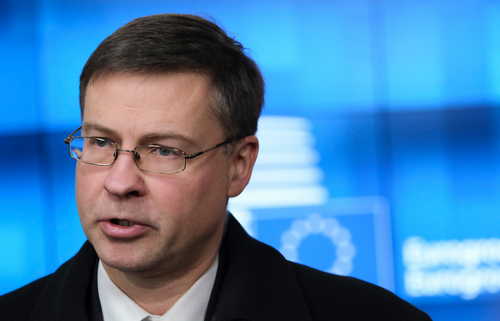
The indecisiveness stems from a lack of actionable information. Specifically, Libra “lacks detail”, according to Dombrovskis.
Despite repeatedly asking the Facebook-launched Libra Association for information about its payments ecosystem and eponymous stablecoin, the Commission – the EU’s executive branch – has yet to determine what, exactly, Libra is.
“As Libra is still a project, and thereby a moving target, the information provided remains insufficient for determining the precise nature of Libra and, by extension, its relation with existing EU law,» he said.
But he said the Commission wants to “act swiftly” in creating regulations for Libra, stablecoins and other EU crypto-asset projects. This reaffirms the Commission’s Dec. 5, 2019, declaration that it will police stablecoins and their “risk” to financial stability.
Libra faced regulatory backlash after it was announced last year, with lawmakers and agencies worldwide calling for a halt to its development until the Facebook-led project could be scrutinized.
Zuckerberg said in testimony before a U.S. congressional committee last year that Facebook would withdraw from the project if the association chooses to launch before securing regulatory approvals.